This article will discuss critical considerations that should be taken into account before scheduling a crane service. By understanding these key areas, you can ensure a safer and more efficient operation. Cranes have become an indispensable tool in the construction industry, offering unparalleled capabilities for lifting and moving heavy loads. Nevertheless, employing crane services demands careful planning and insight into various aspects critical to the project’s success. This article will explore the essential considerations you must examine before choosing crane services for your construction needs.
1. What Type of Crane is Needed for Your Project?
Understanding the specific requirements of your project will help in determining the appropriate type of crane needed, which can vary based on weight capacity, height, and terrain. Different cranes are specially designed to cater to diverse construction settings, from rough terrain and all-terrain cranes to more specialized models like tower cranes. Assessing the weight of the materials to be lifted is crucial, as cranes come with varying load limits, and exceeding these can compromise safety. Additionally, you must consider the height to which materials need to be lifted, as some cranes can extend far higher than others. The terrain of your construction site can influence your choice dramatically; for instance, rough terrain cranes are designed for challenging surfaces often found on unfinished sites.
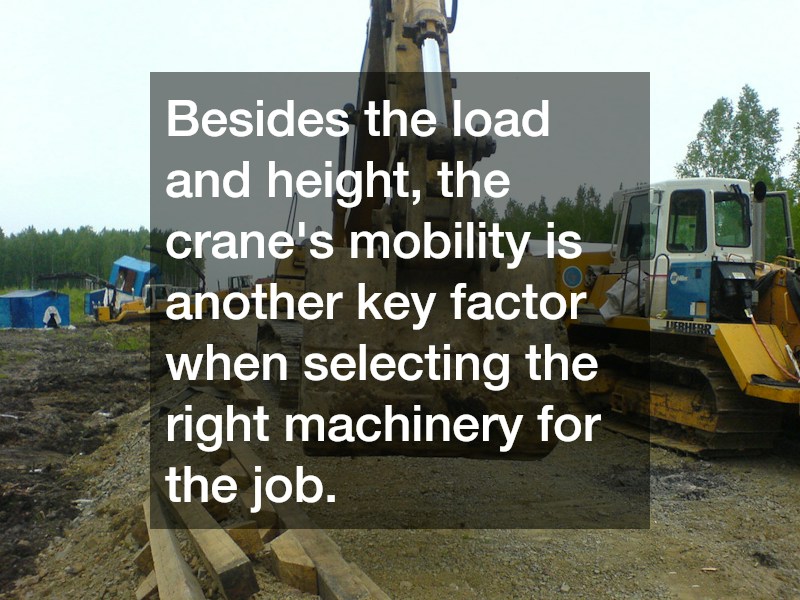
Besides the load and height, the crane’s mobility is another key factor when selecting the right machinery for the job. Mobile cranes offer flexibility and can be moved between different locations with ease, making them ideal for dynamic construction projects. However, if the project requires a crane to be in a fixed location for extended periods, a tower crane might be more suitable. Tower cranes provide height and lifting capacity needed for erecting tall buildings and are installed on-site. Therefore, understanding how these aspects align with specific project needs will guide you toward selecting the most efficient crane type.
Moreover, consulting with crane service professionals or a knowledgeable crane operator is advisable, as their expertise can lend additional insights into which crane best suits your needs. They can assess your project requirements and recommend the most efficient and safe machinery. Furthermore, operators often acknowledge the latest technological advancements incorporated into modern cranes, which can enhance safety and efficiency. For example, some cranes are now equipped with sensors and digital readouts to ensure weights are monitored meticulously during lifts.
2. How Much Time Will the Crane Service Take?
Knowing the time frame for the crane service is crucial for effective scheduling and coordination with other construction activities, avoiding delays and ensuring a smooth workflow. Cranes, though highly efficient, must be scheduled precisely to align with worker availability and project timelines. The duration of crane use can fluctuate based on the project’s complexity, site preparation needs, and any potential for unforeseen delays. Optimizing crane operation times can lead to significant savings and increased productivity by minimizing idle time and streamlining operations.
An initial step in time estimation involves a thorough site assessment to gauge factors such as the complexity and volume of tasks to be performed. Understanding when peak usage periods occur during your construction project allows for better planning and resource allocation, ensuring minimal disruption to the overall workflow. By clearly mapping out the phases of your project, you can determine when and for how long cranes will be required. Efficient planning helps in booking services in advance, which can be essential given the high demand for crane services in the construction sector.
3. What are the Costs Involved in Crane Services?
Being informed about the potential costs associated with crane services, including rental fees, operator expenses, and any additional charges, is essential for budget management. Rental costs can vary significantly based on the type, size, and duration of crane hire, as well as geographic location. To manage expenses, it is critical to obtain detailed quotes that comprehensively outline costs and any associated fees. Understanding what the basic rental fee covers—such as assembly, transportation, and insurance—can prevent unexpected costs from arising later.
In addition to the base rental cost, you may incur other charges such as operator fees, which can vary based on the operator’s expertise and the complexity of the job. Some projects might require operators with specialized skills to handle sophisticated tasks. Additionally, downtime charges might apply if delays occur due to issues unrelated to the crane’s operation. Being vigilant about these potential extra costs can aid in creating a more accurate project budget, avoiding surprises that could inflate the original cost estimates.
By considering the type of crane, the timeframe for service, and the associated costs, you can make informed decisions that lead to successful project outcomes. Selecting the appropriate crane tailored to your project’s unique demands, scheduling operations efficiently, and managing the associated financial aspects are crucial steps in enhancing construction productivity. These factors not only contribute to the safety and efficiency of operations but also ensure that your project remains on time and within budget, ultimately driving the value and success of your construction endeavor.